

So Your Guy Signed With A New City Or He Was Traded - Now what?
What Every Professional Athlete Family Should Ask Before Signing a Lease in a New City
JUPITER, Florida | Authored by: Holly Meyer Lucas, MLB Wife and Pro Sports Real Estate Expert Team Leader: The Meyer Lucas Real Estate Team
One thing every professional athlete and their family have in common - across all sports and all generations - is this: finding and securing in-season housing can be an absolute runaround.
As a longtime baseball wife, I know this logistical hellscape all too well. Your husband gets traded to a new city. You find out about it on Twitter before he even does. Within 24 hours, you are boarding a plane to a city you did not plan on living in, tasked with finding a home that feels safe, normal, and functional for your family.
You only have so many nights in the team hotel, so the clock is already ticking. The team is on the road, so you are doing this solo. His agent offers to help. You reach out to the Realtors the clubhouse recommends, and they are helpful and well-intentioned. And still - no matter how many times you have done this - it is a logistical scramble every single time.
Your partner signs with a new team, gets traded, or relocates, and suddenly the responsibility of finding a home lands squarely on your shoulders. It becomes a familiar cycle. For many families, it feels like groundhog day - the same fast-moving process, repeated over and over, often under pressure and always against the clock.
When a relocation does happen, it brings a completely new market, a new routine, and a new set of decisions that need to be made quickly. Securing an in-season home is rarely simple. It is often done from afar, and it almost always requires signing a lease sight unseen.
Even for seasoned families, there is still stress around getting it right. And that does not even begin to account for mid-season trades, when timelines compress even further and decisions need to happen almost immediately.
I have spent more than a decade working alongside professional athletes and their families, handling real estate transactions across the country with a focus on speed, discretion, and precision. I am also living this life personally. Between my own experience and helping hundreds of athlete families secure in-season homes and spring training rentals, I can tell you this - every single transaction presents opportunities for friction.
As real estate agents, we work to anticipate issues and solve problems before they surface. But there are also key things you can do as an athlete or athlete spouse to stay ahead of the process. Some of these things need to happen before you sign. Others happen the moment you walk through the door. Here are five things every pro sports family should know when entering into a new lease and taking a rental home for the season ensuring limited friction, run around, and headaches:
1. Structure the Security Deposit the Right Way
One of the most overlooked details in any lease is where the security deposit is actually held. I always recommend requesting that your deposit be placed in a neutral escrow account, ideally with a real estate broker or title company rather than a personal account controlled by the landlord. This creates transparency, protects both sides, and establishes a professional standard from the beginning.
It also removes unnecessary tension at move-out, when timelines are tight and expectations need to be clear. In pro sports it is damn near impossible to hand deliver a security check after the lease ends, so having that security deposit with an escrow holder cuts down on the runaround afterward.
2. Document the Property Like a Crime Scene: Before and After Move Out
The moment you gain access to the property, treat it like a closing walkthrough. Take detailed, time-stamped photos and videos of everything. Every room, every surface, every fixture. Open drawers. Open cabinets. Capture the inside of appliances. Document floors, walls, and any existing wear. Then share that documentation with your real estate agent and the landlord immediately. Simply demonstrating to the landlord that you are on the ball will often cut down on squirreliness after the lease ends. I have seen this one step save clients from unnecessary disputes time and time again. It creates a clear record of the home’s condition on day one and keeps everyone aligned when it is time to move out, and how you left the property post move-out.
BONUS: Schedule a professional cleaner to come clean the home after you move out. Even if you are a clean and tidy person and leave the home in great shape, there is something about the landlord walking into a home that has been professionally cleaned that will almost always cut down on security deposit squirreliness.
3. Set Up a Centralized Communication Hub
One of the biggest mistakes I see is communication scattered across too many people and platforms. Your household should operate with the same level of organization as your professional life. I recommend setting up a dedicated email address and phone number specifically for housing and household logistics. Your agent, family office, assistant, and vendors should all be looped into this system. Utilities, maintenance, deliveries, and service coordination can all run through one centralized hub. It keeps everything organized and allows your team to step in seamlessly when needed.
4. Clarify Furnishings and Inventory Upfront
“Furnished” can mean very different things depending on the property. Before you sign, confirm exactly what is included - from furniture to kitchenware, linens, electronics, and outdoor items. If something is essential to your day-to-day life, make sure it is clearly outlined in writing. This is where photos come into play - I also recommend clarifying how damages, replacements, and missing items will be handled during your stay. These details matter more than most people expect.
5. Define Privacy and Access Expectations Early
Privacy is not a luxury when you’re in pro-sports. It is a safety concern and an absolute vital part of the process when you’re negotiating your lease. Before signing, confirm who has access to the property, under what circumstances, and how notice will be given. If there is a property manager involved, establish clear communication protocols and boundaries from the start. Your home during the season should function as a true private space, and that only happens when expectations are clearly defined in advance.
You’ve got this.
Relocating as a professional athlete family comes with so many moving parts and truly: I see you. Your housing should feel steady, organized, and fully handled. When your lease is structured correctly, your documentation is thorough, and your communication is streamlined, you can settle in quickly and focus on what actually matters once the season begins. Because when everything else is moving fast, your home should feel like the one thing that is already dialed in.
And lastly, hiring an agent from within the Compass Sports and Entertainment Division to run point for you can dramatically cut down on the logistics of your lease. Our division is made up of trained, seasoned, and experienced professionals who know how to handle this exact scenario backward and forward, have seen it all, done it all, and can help you.

ABOUT
Holly Meyer Lucas is a nationally recognized real estate expert, founder, and trusted advisor to professional athletes and their families across the country. She is the team leader of the award winning The Meyer Lucas Real Estate Team at Compass, based in Jupiter, Florida, specializing in high end real estate with a niche clientele within MLB, NFL, NBA, NHL, and MLS. Over the past decade, Holly and her team have facilitated hundreds of real estate transactions for professional athletes, many of them executed remotely, under tight timelines, and with a high level of discretion.
Holly is a longtime baseball wife, giving her a firsthand understanding of the fast-moving realities of trades, relocations, and in-season transitions. That perspective informs every client experience she delivers, combining professional expertise with real-world insight into what athlete families actually need. Her husband Ed Lucas is currently in the front office with the San Francisco Giants. Together they live in Jupiter, Florida and have four children.
It starts at home
Literally and figuratively. The value of the home, and the values exemplified within the home. The structure itself that cocoons and safeguards. The flow and sacredness of that physical space.
Let’s start with investing and saving. Today’s entertainer is making money and is savvier at a younger age thanks to TikTok, YouTube and NIL. While an older generation of entertainers invested by purchasing long-term US bonds and annuities, today’s athlete is buying crypto and investing in VC funds. They also are starting to realize how quickly all fiat currencies are being debased and so they want to own scarce assets that will hold value over time - think Bitcoin and great businesses with cash flows.
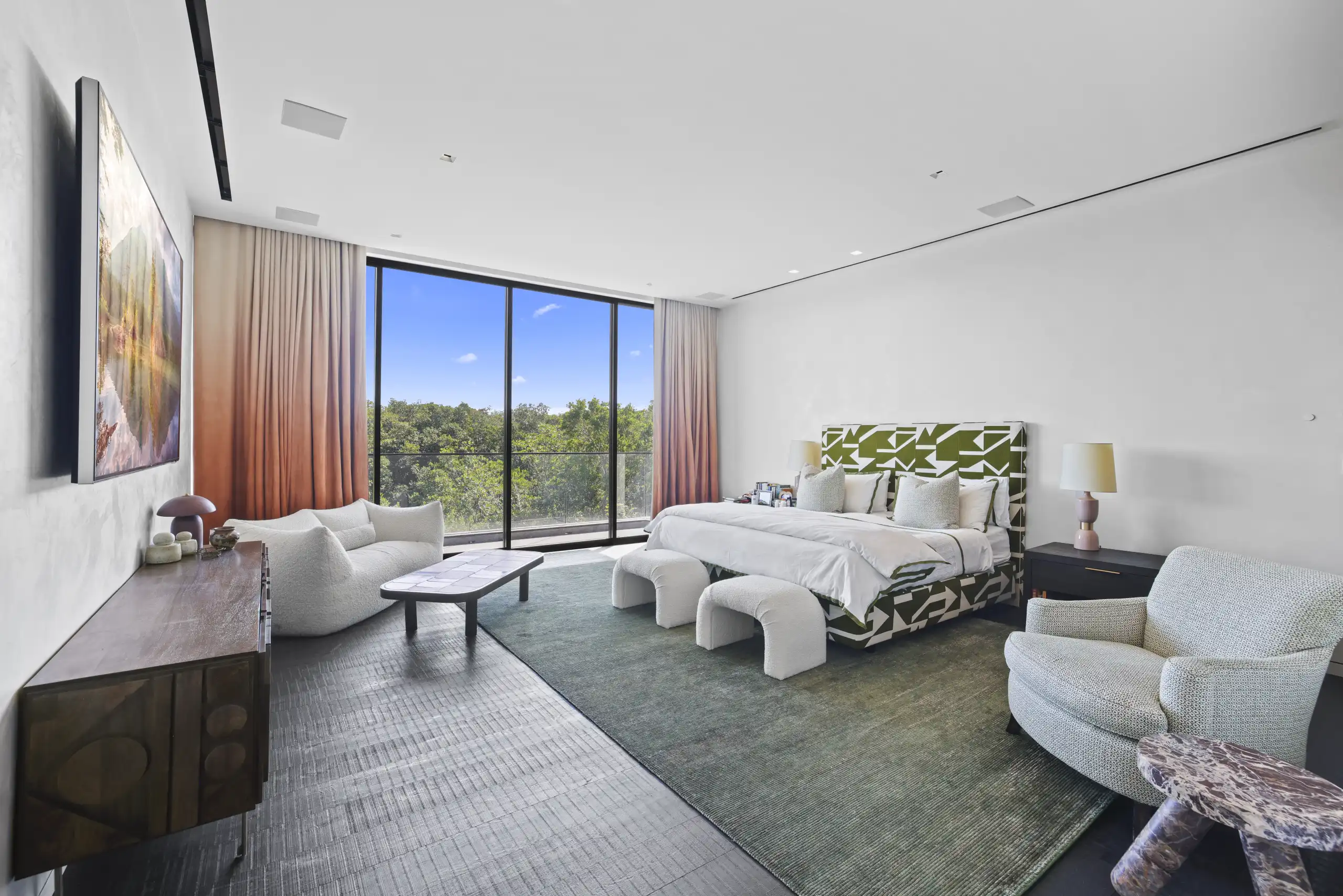
In fairness, both generations own real estate because they need a place to live, and also because high-quality real estate is an inflation hedge and store of value. The difference is that in the world today, there is no privacy for the high-profile individual. Except at home. And in an era of debasing fiat, owning high-quality real estate is ever more important because scarcity drives value. Real estate is seen both as an investment and as a refuge.
What kind of refuge am I referring to? Privacy yes, but a place where that entertainer increasingly works as well (think: home recording or podcast studio, home theatre for analyzing game film). It’s also a wellness spa of sorts replete with the home gym, sauna, cold plunge, treatment room, hyperbaric chamber and other anti-aging modalities. It may be the only place of stillness and quiet in an entertainer’s life. It’s a place for family and friends.

Yin-Yang
The balance of the home for today’s entertainer can be referenced through an ancient paradigm of balance: Yin-Yang.
When we think about an entertainer’s house, the Yang (masculine) can literally be thought of as the structure itself - keeping the occupant protected from the outside world, but also the lines and geometry that frame the spaces and rooms throughout the property. The rigidity, or structure, can also be ascribed to the scarcity that the home represents in the marketplace as a strong store of value.
The Yin (female) can be seen as the flow of energy between the rooms, allowing the essence of comfort, movement, creativity and nourishment to be embodied by the entertainer.

The home has become a sacred space where all aspects of the entertainer’s life meld and mold in an artistic dance that is unique to that individual. It’s a place where the creative process takes root, and also where rest and restoration cement. The real estate itself, just as the lifestyle of the entertainer, is an expression. It is art.
Compass Sports & Entertainment Division members collectively know how to hold all of these nuances together and guide our sports and entertainment clients appropriately. As such, we play an active role in shaping the aforementioned evolution of the home-life for our clients - one that melds together the artistic, creative, restorative and financial elements in an intricate balance that is unique to each one of them.
Social Cookies
Social Cookies are used to enable you to share pages and content you find interesting throughout the website through third-party social networking or other websites (including, potentially for advertising purposes related to social networking).